
Sciatica vs Slip Disc: Symptoms, Causes, Diagnosis & Treatment Guide
- Home
- Sciatica vs Slip Disc: Symptoms, Causes, Diagnosis & Treatment Guide
Lower back pain is one of the most common musculoskeletal problems affecting adults worldwide. While many people use the terms sciatica vs slip disc interchangeably, they are not the same condition. Understanding the difference between the two is important because the underlying causes, treatment options, and recovery process may vary significantly.
A slip disc often causes sciatica, but not every patient with sciatica has a slipped disc. Similarly, lower back pain may result from several spinal conditions that require different treatment approaches.
Early diagnosis and timely treatment can help reduce pain, restore mobility, and prevent long-term nerve damage. Depending on the severity of symptoms, treatment may range from physiotherapy and medications to advanced minimally invasive procedures such as endoscopic spine surgery Gaya.
In this comprehensive guide, we’ll explain the differences between sciatica and slip disc, their symptoms, causes, diagnosis, treatment options, and when surgery may become necessary.
Sciatica is not a disease itself but a collection of symptoms that occur when the sciatic nerve becomes irritated or compressed.
The sciatic nerve is the largest nerve in the human body and may become irritated or compressed due to spinal conditions such as a herniated disc. For additional patient education, the American Academy of Orthopaedic Surgeons (AAOS) provides helpful information on spine and nerve conditions.
When this nerve becomes compressed, patients often experience pain that radiates from the lower back into one or both legs.
Sciatica may develop gradually or suddenly depending on the underlying cause.
The severity of symptoms varies depending on the degree of nerve compression.
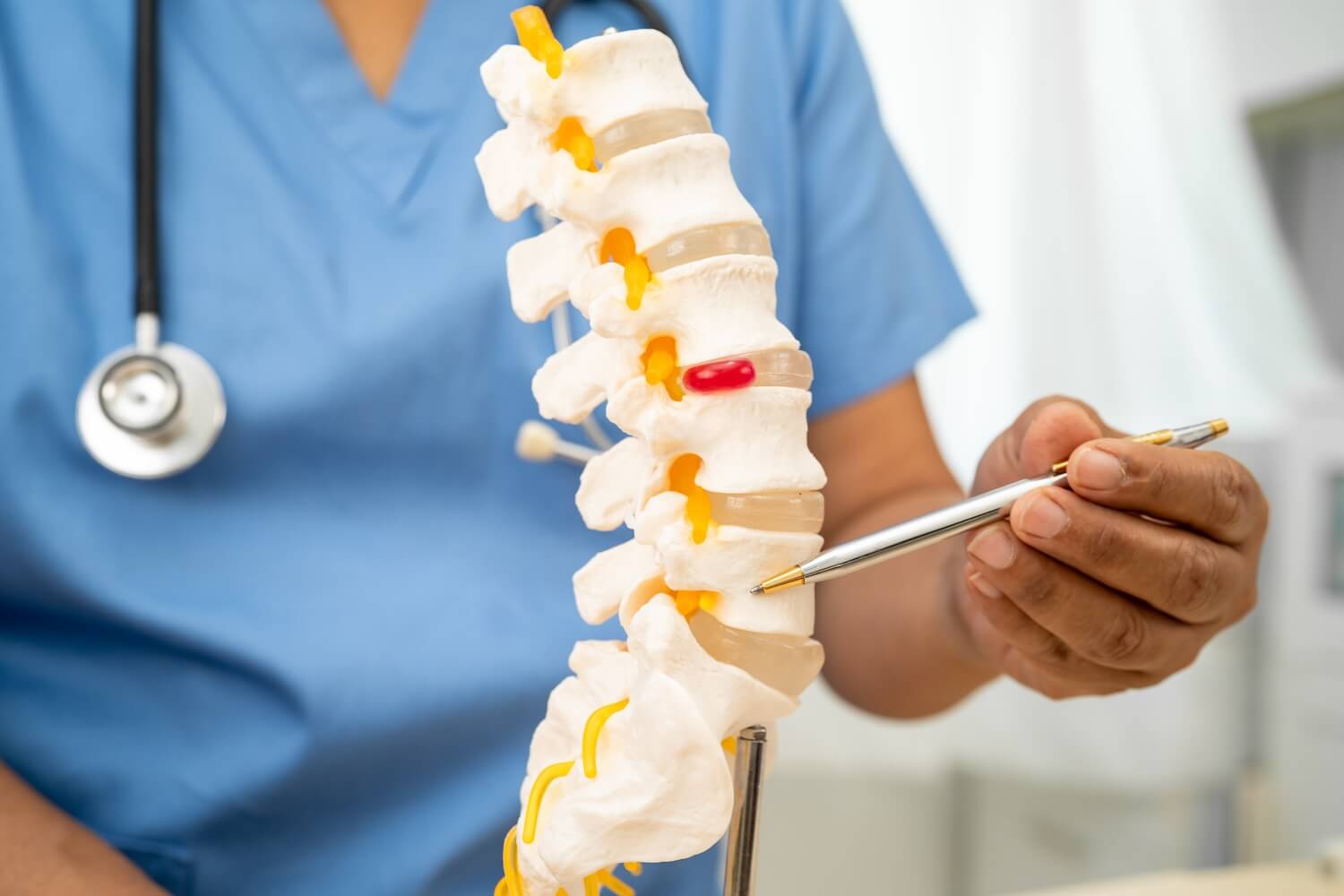
A slip disc, also known as a herniated disc or prolapsed intervertebral disc, occurs when the soft inner portion of a spinal disc pushes through its outer layer.
Between every vertebra lies a cushion-like disc that acts as a shock absorber during movement. Age-related degeneration, heavy lifting, sudden injury, or repetitive strain can cause these discs to weaken over time.
When a damaged disc presses against nearby spinal nerves, patients may develop pain, numbness, weakness, or symptoms of sciatica.
Although the term “slip disc” is commonly used, the disc does not actually slip out of place. Instead, it bulges or herniates and irritates surrounding nerves.
| Feature | Sciatica | Slip Disc |
|---|---|---|
| Definition | Compression or irritation of the sciatic nerve | Damage or herniation of a spinal disc |
| Primary Cause | Nerve compression | Disc degeneration or injury |
| Main Symptom | Leg pain | Back pain with or without leg pain |
| Can Cause Each Other? | Often caused by a slip disc | May lead to sciatica |
| Treatment | Depends on the underlying cause | Depends on severity of disc damage |
Simply put, a slip disc is one possible cause of sciatica, while sciatica describes the symptoms caused by nerve irritation.
Several medical conditions may contribute to nerve compression or spinal disc problems.
As people age, spinal discs gradually lose water content and flexibility. This natural ageing process increases the likelihood of disc bulging and herniation.
Improper lifting techniques place excessive stress on the lower spine and increase the risk of disc injuries.
Prolonged sitting, poor ergonomics, and incorrect posture during work can accelerate spinal degeneration.
High-impact sports, sudden twisting movements, and repetitive strain may increase the risk of spinal injuries.
Excess body weight increases pressure on spinal discs and contributes to faster degeneration.
Weak core muscles provide less support to the spine, making spinal injuries more likely.

Although occasional back pain is common, certain symptoms require immediate medical evaluation.
Ignoring these symptoms may allow nerve compression to worsen, increasing the risk of permanent nerve damage.
Accurate diagnosis begins with a detailed medical history and physical examination performed by an experienced spine specialist.
Your doctor will evaluate:
If a spinal disorder is suspected, additional investigations may be recommended.
MRI is considered the most valuable imaging investigation for diagnosing disc herniation, nerve compression, and spinal soft tissue abnormalities.
X-rays help evaluate spinal alignment, fractures, arthritis, and structural abnormalities.
CT imaging may be used when MRI is not suitable or additional bone detail is required.
A neurological assessment helps determine whether nerve compression is affecting muscle strength, sensation, or reflexes.
Early diagnosis allows patients to receive appropriate treatment before symptoms become more severe or permanent.
The good news is that many patients with sciatica or a mild slip disc improve without undergoing surgery. Early diagnosis, appropriate medications, physiotherapy, lifestyle modifications, and activity changes often provide significant symptom relief.
However, conservative treatment is most effective when started early. Delaying medical evaluation despite persistent symptoms may increase the risk of prolonged nerve compression and permanent weakness.
The primary goals of non-surgical treatment are to reduce inflammation, relieve pressure on the affected nerve, improve spinal stability, and restore normal movement.
Patients can also explore reliable information about herniated discs and back pain through MedlinePlus, a trusted health information resource from the U.S. National Library of Medicine.
Complete bed rest is no longer recommended for most patients with sciatica or slip disc. Instead, doctors usually advise maintaining light daily activities while avoiding heavy lifting, prolonged sitting, and sudden twisting movements that may worsen symptoms.
Depending on the severity of pain, medications may be prescribed to reduce inflammation, control muscle spasms, and improve patient comfort during recovery.
Physiotherapy is one of the most effective treatments for spinal conditions. A personalised rehabilitation program focuses on improving posture, strengthening core muscles, increasing flexibility, and reducing stress on the spine.
Patients who consistently follow physiotherapy recommendations often experience better pain relief and improved long-term spinal health.
Maintaining a healthy body weight, improving posture, avoiding smoking, and performing regular low-impact exercises can significantly reduce the likelihood of recurring spinal problems.
While many patients recover with conservative treatment, surgery may become necessary if symptoms persist despite several weeks of appropriate medical care or if neurological problems continue to worsen.
Your spine specialist may recommend surgery when:
For carefully selected patients, modern endoscopic spine surgery Gaya offers a minimally invasive solution that may relieve nerve compression while preserving surrounding muscles and tissues.
Advances in spinal surgery have made treatment less invasive than traditional open procedures. Endoscopic spine surgery uses specialised instruments and a small camera to access the affected spinal area through a tiny incision.
Potential benefits include:
Not every patient is a suitable candidate for endoscopic surgery. A comprehensive clinical evaluation and MRI findings help determine the most appropriate treatment approach.
Recovery varies depending on the patient’s overall health, the underlying spinal condition, and the complexity of the procedure.
Many patients begin walking within a short time after surgery and gradually resume light daily activities under medical supervision.
Recovery generally focuses on:
Following your surgeon’s instructions and rehabilitation program is essential for achieving the best long-term outcome.
Yes. Sciatica can return if the underlying cause is not properly managed or if patients return too quickly to activities that strain the spine.
Fortunately, adopting healthy habits can greatly reduce the risk of recurrence.
Helpful preventive measures include:
Persistent back pain should never be ignored, particularly when accompanied by leg pain, numbness, tingling, or weakness.
You should schedule an evaluation if you experience:
Patients from Bihar, Jharkhand, Gaya, Patna, Aurangabad, Nawada, Jehanabad, Ranchi, Dhanbad, Hazaribagh, Koderma, and surrounding regions seeking advanced spine care may benefit from consulting an experienced orthopaedic surgeon for a comprehensive spinal evaluation.
No. Sciatica is a group of symptoms caused by irritation or compression of the sciatic nerve, whereas a slip disc is a structural spinal condition that may cause sciatica.
Many mild to moderate disc herniations improve with conservative treatment, including physiotherapy, medications, and lifestyle modifications.
The most effective treatment depends on the underlying cause. Medical evaluation, physiotherapy, medications, and guided exercises often provide significant relief.
Yes. Gentle walking is generally encouraged because it helps improve circulation, maintain mobility, and reduce stiffness. However, activity should always follow medical advice.
MRI is the preferred imaging investigation because it provides detailed information about spinal discs, nerves, and surrounding soft tissues.
Surgery may be recommended when severe pain, progressive weakness, significant nerve compression, or loss of bladder or bowel control occurs despite appropriate conservative treatment.
For carefully selected patients, endoscopic spine surgery is considered a safe and minimally invasive treatment performed by experienced spine surgeons.
Recovery varies depending on the patient’s condition, but many individuals return to light daily activities sooner than with traditional open spine surgery.
Yes. Many patients recover successfully through structured physiotherapy and conservative treatment without requiring surgery.
If back pain is associated with leg pain, numbness, weakness, or suspected spinal disorders, consulting an experienced orthopaedic specialist is recommended for accurate diagnosis and appropriate treatment planning.
Although sciatica vs slip disc are closely related, they are not the same condition. Sciatica refers to symptoms caused by irritation of the sciatic nerve, while a slip disc is one of the common structural causes behind those symptoms.
Early diagnosis, timely treatment, and appropriate rehabilitation play a crucial role in preventing long-term nerve damage and restoring normal spinal function. Many patients recover with medications and physiotherapy, while others with persistent nerve compression may benefit from advanced minimally invasive procedures such as endoscopic spine surgery Gaya.
If persistent lower back pain or radiating leg pain is affecting your daily life, seeking early evaluation from an experienced spine specialist can help identify the underlying cause and guide you toward the most suitable treatment for lasting relief.

