
Knee Replacement: Benefits, Risks, Alternatives & When Surgery May Be Needed
- Home
- Knee Replacement: Benefits, Risks, Alternatives & When Surgery May Be Needed
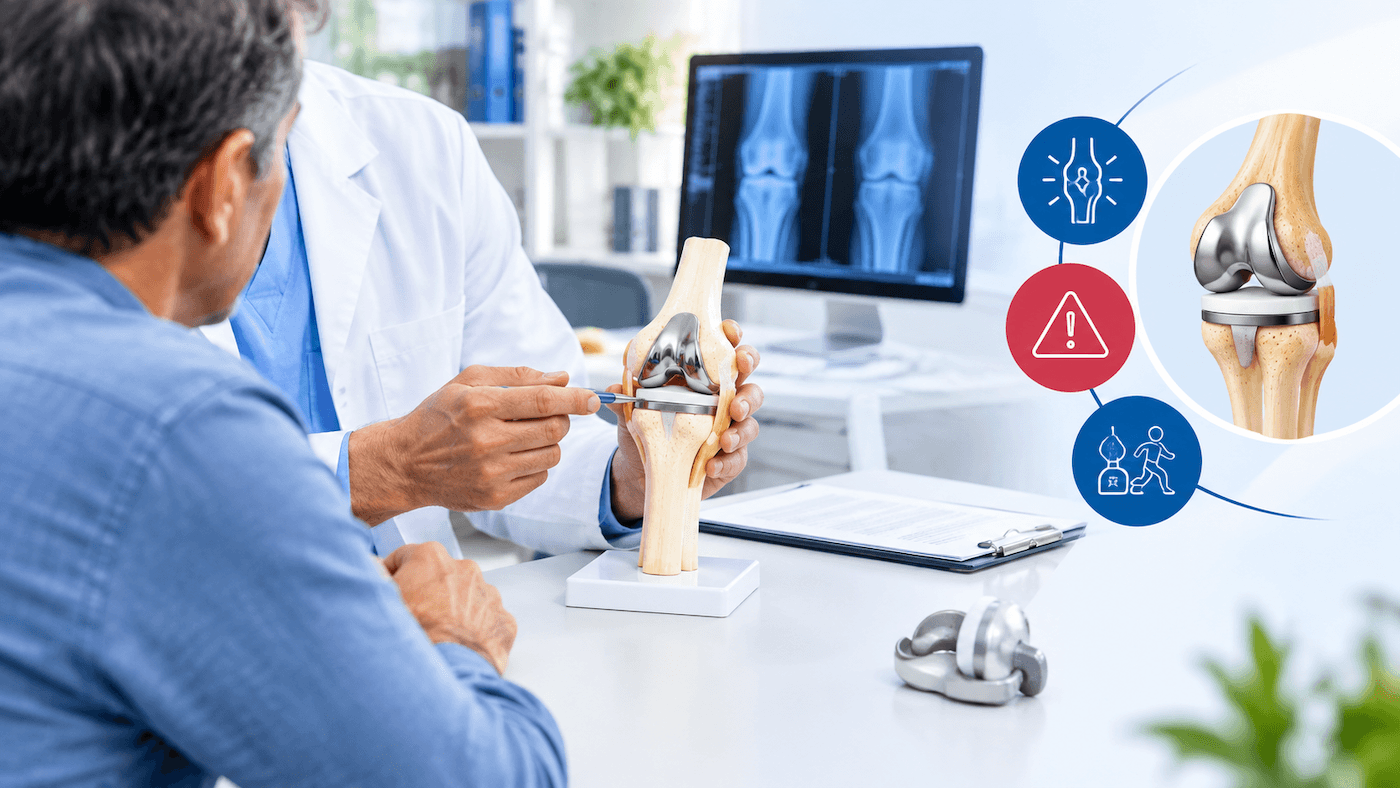
Persistent knee pain can gradually affect much more than walking. Climbing stairs, getting up from a chair, sleeping comfortably, exercising, and managing everyday activities can all become difficult when the knee joint is severely damaged.
For some patients with advanced arthritis or significant joint degeneration, knee replacement treatment may provide meaningful pain relief and improved mobility when other treatments are no longer providing sufficient benefit.
However, knee replacement is a major decision, and surgery is not automatically the right choice for every person with knee pain. Understanding the potential benefits, possible risks, available alternatives, and situations in which surgery may be considered can help patients have a more informed discussion with an orthopaedic specialist.
This guide explains what patients should know before considering total knee replacement, including expected benefits, potential risks, non-surgical alternatives, recovery considerations, and important questions to ask before treatment.
Knee replacement surgery, commonly referred to as total knee replacement (TKR), involves replacing damaged surfaces of the knee joint with artificial components. The procedure is generally considered when severe joint damage causes persistent pain and functional limitations that have not improved adequately with conservative treatment.
Advanced knee arthritis is one of the most common reasons for knee replacement. Other conditions can also contribute to severe joint damage and loss of function.
The primary goals of treatment are to reduce pain, improve mobility, restore useful knee function, and help the patient return to everyday activities with greater comfort.
Knee replacement is generally considered after a thorough assessment of symptoms, physical function, imaging findings, medical history, and previous treatment.
A specialist may discuss knee replacement when a patient has:
The decision should be based on the overall impact of the knee condition rather than an X-ray finding alone. Two people with similar imaging may have very different symptoms and treatment needs.
For appropriately selected patients, knee replacement can provide substantial improvements in pain and function. However, outcomes vary between individuals and depend on factors such as overall health, joint condition, rehabilitation, and adherence to postoperative guidance.
One of the main reasons patients consider knee replacement is persistent pain caused by advanced joint damage. Successful surgery can significantly reduce arthritis-related knee pain and make everyday movement more comfortable.
Severe arthritis can restrict knee movement and make walking increasingly difficult. Replacing the damaged joint surfaces may allow patients to regain greater functional mobility.
When knee pain limits everyday activities, patients may become dependent on family members for tasks such as shopping, climbing stairs, or moving around the home. Improved mobility can help restore greater independence.
Reducing chronic pain and improving physical function can have a positive effect on sleep, social activities, travel, household activities, and general quality of life.
After appropriate recovery, many patients can return to low-impact activities such as walking, swimming, and cycling, depending on their individual condition and medical advice.
Like any major surgical procedure, knee replacement carries potential risks. Most patients recover without serious complications, but it is important to understand that surgery cannot guarantee a particular outcome.
Possible risks can include:
The individual level of risk depends on factors such as age, general health, weight, existing medical conditions, previous surgeries, and the complexity of the knee problem.
Your surgeon should explain the potential benefits and risks based on your personal medical circumstances before surgery.
Yes. Knee replacement is not always the first treatment option. Depending on the severity of joint damage, many patients can initially be managed with non-surgical approaches.
A structured rehabilitation programme can improve muscle strength, flexibility, balance, and joint function. Strengthening the muscles around the knee may reduce stress on the joint and improve mobility.
For patients who are overweight, achieving a healthier weight can reduce mechanical stress on the knee and may improve pain and physical function.
Depending on the patient’s medical history, a doctor may recommend medicines to manage pain and inflammation. These should be used according to professional medical advice.
Changing activities that repeatedly aggravate knee pain can sometimes reduce symptoms. Low-impact activities may be better tolerated than high-impact exercise for patients with significant joint degeneration.
Selected patients may be considered for other treatments depending on the cause and severity of their knee problem. The appropriate option should be determined after a proper orthopaedic assessment.
There is no single time period after which every patient should undergo knee replacement. The decision depends on whether pain and functional limitations continue despite appropriate treatment.
A patient may need to discuss surgery when:
The aim is not to operate simply because arthritis appears on an X-ray. The goal is to identify when the patient’s symptoms, joint damage, and functional limitations justify considering surgery.
A detailed preoperative evaluation helps determine whether knee replacement is appropriate and allows the surgical team to plan treatment safely.
The assessment may include:
Patients should provide information about previous knee treatments, medications, allergies, existing medical conditions, and earlier investigations.
The implant is an important component of knee replacement surgery. Different implant designs and specifications are available, and the appropriate choice depends on the patient’s anatomy, joint condition, age, bone quality, activity requirements, and other clinical considerations.
A higher-priced implant is not automatically the right choice for every patient. The surgeon should explain why a particular implant is being considered and how it relates to the patient’s individual needs.
This is also one of the reasons why knee replacement cost in India, Bihar and Jharkhand can vary between patients and treatment plans.
Recovery after knee replacement is gradual and differs between patients. Early mobilisation and physiotherapy are important components of rehabilitation.
Many patients begin assisted walking soon after surgery, followed by progressive strengthening and movement exercises. During the following weeks and months, patients generally work toward improving knee flexibility, muscle strength, balance, walking ability, and confidence.
Some patients recover faster than others. Age, general health, pre-surgery fitness, muscle strength, rehabilitation participation, and the complexity of the procedure can all influence recovery.
For a more detailed timeline, read our guide to knee replacement recovery time.
The goal of knee replacement is to improve pain and functional mobility, but expectations should remain realistic.
Many patients experience substantial improvements in walking and everyday activities after successful recovery. However, an artificial knee is not identical to a natural knee, and certain high-impact activities may not be recommended.
Your surgeon and rehabilitation team can provide activity recommendations based on your recovery and individual circumstances.
Patients should feel comfortable discussing the treatment decision with their orthopaedic surgeon. Useful questions include:
A detailed consultation helps patients make decisions based on their individual circumstances rather than general information found online.
Patients seeking orthopaedic evaluation may choose a treatment centre based on clinical expertise, available facilities, accessibility, rehabilitation support, and continuity of care.
Vardaan Laser Gaya provides orthopaedic and joint care for patients from Gaya and surrounding areas. Patients travelling from other parts of Bihar or Jharkhand can discuss their condition, available treatment options, and expected recovery during consultation.
If you are considering treatment, you can review information about the knee replacement treatment available at Vardaan Laser Gaya.
For appropriately selected patients with severe arthritis or joint damage that significantly affects daily life, knee replacement can provide substantial pain relief and improve mobility. Whether it is appropriate depends on the individual’s symptoms, joint condition, previous treatment, and overall health.
The main potential benefits include reduced chronic knee pain, improved mobility, better ability to perform daily activities, and improved quality of life. Results vary between patients and depend partly on rehabilitation and overall health.
Potential risks include infection, blood clots, bleeding, stiffness, persistent pain, instability, implant wear or loosening, and the possibility of additional surgery. Your surgeon can explain the risks that are particularly relevant to your medical condition.
Some patients can manage knee arthritis with physiotherapy, exercise, weight management, medication, activity modification, and other appropriate treatments. However, advanced joint damage with persistent symptoms may eventually require surgical treatment.
Severe pain, difficulty walking, significant stiffness, deformity, sleep disturbance, and persistent limitations despite appropriate non-surgical treatment are reasons to discuss knee replacement with an orthopaedic specialist.
Recovery varies considerably. Many patients improve substantially during the first several weeks, while strength, flexibility, and overall function can continue improving for several months.
Knee implants are designed for long-term use, but their lifespan varies between individuals. Factors such as activity level, weight, implant characteristics, and overall joint loading can influence long-term implant performance.
Age alone does not determine whether someone is suitable for knee replacement. The decision depends on the severity of joint damage, symptoms, functional limitations, previous treatments, and overall clinical circumstances.
Delaying surgery does not necessarily cause a problem in every patient, particularly when symptoms remain manageable. However, severe ongoing pain, progressive deformity, reduced mobility, or prolonged inactivity can significantly affect quality of life and physical function. A specialist can help determine whether continued conservative treatment is reasonable.
The most appropriate next step is an orthopaedic evaluation. Your doctor can review your symptoms and imaging, assess the condition of your knee, discuss non-surgical alternatives, and explain whether knee replacement is appropriate.
Knee replacement can be an effective treatment for appropriately selected patients with severe arthritis and advanced joint damage. Its potential benefits include significant pain relief, improved mobility, greater independence, and better quality of life.
However, surgery also carries risks, and not every patient with knee pain requires a replacement. Non-surgical treatments may remain appropriate when symptoms can be managed effectively.
The decision should therefore be based on the patient’s symptoms, functional limitations, joint condition, previous treatment, overall health, and personal goals.
If persistent knee pain is affecting your daily life, an orthopaedic consultation can help you understand whether continued conservative treatment or knee replacement treatment is appropriate for your condition.

